Cause honestly, I do not feel good. I've been up since six am, on my day off, just feeling miserable. Miserable.
Which is why, this post is so late and I have nothing of writerly merit to tell you.
But I realized something, when people are feeling miserable, they want something to make them feel better. Today I worked on my novel the majority of the day (in between trying and failing to nap) and I watched a lot of Olan Rogers videos.
Olan is a youtuber; his job is making YouTube videos. He's a storyteller. Most of his stuff, is him retelling things that have happened to him in his life. Whether it was last week's prank or a childhood memory, he retells them all with the same hilarity and enthusiasm.
And laughing is the best medicine.
It made me realize, that although my medium is different that Olan's, and I'm not really writing about my life, and my book isn't meant to be comedic, I too am a storyteller. I have to have the same care and excitement about all my stories or they're not going to turn out right. They are going to flop.
Because if you don't care, you're readers don't care.
Amazing how it's the little things like being sick and looking for comfort, can reveal things you didn't know you needed.
Monday, April 29, 2013

Thursday, April 25, 2013
The Importance of Reading
When I was ten years old, my parents set a limit on how much
money I could spend on books. They couldn’t understand why I wanted to spend
every last cent I had on the newest Babysitter’s Club super special or Nancy
Drew mystery. I craved books; I devoured whatever I could get my hands on.
Pretty much
every writing blog or book about writing I’ve ever read has had the same
advice – if you want to be a writer, then 1. You have to write a lot, and 2.
You have to read a lot. I write YA fantasy, so that’s primarily what I read. I
try to keep up with the newest releases and what’s trending, but sometimes when
I’m in the library I’ll just grab something random.
A few
months ago, I picked up a book with a title I thought sounded interesting
(which shall remain nameless). It started out pretty slow, but I thought I’d
still give it a chance.
It just got
worse.
It became a
joke between me and my husband – he’d ask what I was up to and I’d tell him,
“Reading this terrible book.” And I’d tell him why I thought it was terrible –
the clichés, the two-dimensional love interest, the heroine’s over-the-top
reactions to the most mundane things – and we’d both have a good laugh. He
couldn’t believe I was wasting my time reading it.
It took me
awhile, but I finished the whole thing. Unfortunately, it never improved to the
point where I could call it a decent book. But I learned a lot from reading it.
Sometimes it’s more helpful to see examples of what not to do, instead of just
being told, ‘make sure your characters behave consistently throughout your
story,’ or 'you should mix action with dialogue.’ Seeing the author make
those mistakes made me realize how jarring they are to a reader, and why I
should never, ever make them. I can sit in a writing conference all day
listening to someone lecture about what makes a character flat, but unless I
experience a flat character, I’m personally not going to make that connection.
Read it all – the good, the bad,
the ugly. Figure out what works and why. Do the same for what doesn’t work. I
promise, you’re not wasting your time!
Monday, April 22, 2013
Read it Again?
"Haven't you already read that?"
"Um, yeah..."


 BLINK OF AN EYE by Ted Dekkar- Usually Dekkar books are thrillers, this
 TAHN by L.A Kelly- I love it when the main characters are tortured souls, and Tahn is certianly the most tortured soul I have ever read. He's an assasian, but instead of killing his latest assignment he saves her. This is also a story about forgiveness.
 DAUGHTER OF THE FOREST by Juliet Marillier- A retelling of an old Irish folktale, about the seven children of Lir. When her brothers
"Um, yeah..."
"Why are you reading it again?"
I can't tell you how many times I've been asked those questions. Especially from non-avid readers. Usually I reply with this simple answer: "Cause I love it"
Simple. Straight to the point. Four little words that encompasses a whole lot of feelings and reasons.
Rereading a book or story that you love is like re-watching a movie or listening to a favorite album again. It's the memories; revisiting a past you that was changed by this very moment. You are not the same person anymore, so coming back to this well loved moment is different than the first time. You discover things you didn't notice the second time around. You understand this bit more on the third.
So on and so forth.
To me, the biggest complement to an author is to reread their book again. (And reccommend it to others) It means that the world they created, means something to you. That they have made a difference, just a little.
There are some books that I HAVE to reread, every year, without fail. Even though I know everything that will happen, where the characters will end up, I enjoy it all the same. I won't feel that surprise at the twist ending anymore, but I'll have that satisfaction that I found the little clues that pointed to it. I'll still smile over that intemate scene, still cry over that sad one, and still yell at the villians for make my heroes lives miserable. I'll revisit my favorite characters, still laugh at their wit or whimper at their tragedies. I'll remember why I fell in love with them in the first place.
I'd like to reccommend some of my favorite re-reads:

THE THIEF by Megan Whalen Turner- I adore this book; read it every year. I'm surprised I don't have it memorized with as many times as I have read it. Gen is probably my favorite character of all time.

THE MEASURE OF A LADY by Deeanne Gist- One of my favorite romances. Also a great story of forgiveness.

THE OUTLAWS OF SHERWOOD by Robin McKinley- The best Robin Hood retelling I have ever read. (And I've read quite a few. I love anything Robin Hood.) I love the different portrayl of Robin as a reluctant outlaw, only hiding out and fighting against the Sheriff. McKinley keeps true to the familiar characters-Will Scarlet, Little John, Marian-while making them her own.
 BLINK OF AN EYE by Ted Dekkar- Usually Dekkar books are thrillers, this
book is a romance. Albeit told in typical Dekkar style. It's about an Saudi princess running from her arranged marriage only to be saved (and fall in love with) an American who can see the future.
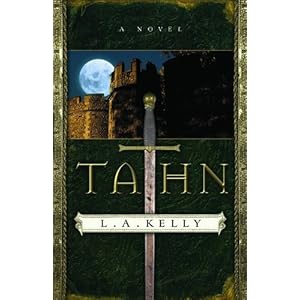 TAHN by L.A Kelly- I love it when the main characters are tortured souls, and Tahn is certianly the most tortured soul I have ever read. He's an assasian, but instead of killing his latest assignment he saves her. This is also a story about forgiveness.
 DAUGHTER OF THE FOREST by Juliet Marillier- A retelling of an old Irish folktale, about the seven children of Lir. When her brothers
are turned into swans, Sorcha must keep silent and sew six shirts of starwort to break the curse. Even when she is taken from her homeland and falls in love with a British lord. I love the stroytelling in this book, and how attached you get to the characters.
What are some of your favorites to reread? Let us know in the comments!
Friday, April 19, 2013
This week...

This week has been one of tragedies, first the bombing in
Boston and then the explosion in Texas. Such loss and heartbreak makes the world stop for a moment.
I remember the things I often forget
to do. Things like – listen closer to my kids, go to lunch with my mom, talk sweeter
to my husband and enjoy the simple things, like strawberries and good books. Life is fragile
and I often take my life and loved ones for granted.
How quickly our world changes from
the familiar and comfortable, to surreal and foreign.
Time stops.
Events are now marked by it. Before
the tragedy and after it.
Heroes emerge and people unite to
take care of one another. I find myself
a renewed patriot at times like this. I
read the stories and see the pictures.
Pride fills my heart and spills down my cheeks. I saw this clip of a
Hockey game that took place Wednesday night in Boston-
It seems as though we go into shock
when we hear about something like this, feel bad but then slowly move on with
our lives. The people who are left behind to pick up the pieces and carry on
are the ones who are the heroes in the long run I think.
Faith, I believe plays an enormous
part in it all. I will use mine for people who cannot hug their loved ones
tonight. I will pray that everyone will find their strength and that those who
were taken will never be forgotten. And
I will pray for peace. Peace for those directly involved and for the rest of us,
to live our lives without fear. To me,
that is the only way to ensure that those who would terrorize us, will never
win. We refuse to cower or be defeated, we will carry on.
Best of thoughts and encouragement
to all who stand in need.
Wednesday, April 17, 2013
Cross-Training
I like
trying new things and challenging myself, so about four years ago I decided to
attempt a half-marathon. I thought that if I wanted to run 13.1 miles, all I
had to do was start training seven weeks before the race – the first Saturday
I’d run 6 miles, the second Satuday 7, and so on. During the week I’d run
anywhere from 3-5 miles per day. I put the treadmill on the same speed every
time I ran – 6 miles an hour.
When race
day arrived, I was super nervous. As I first started running, I kept worrying I
was going too fast or too slow. My knee started hurting about halfway through. At
a few places, I felt like I wanted to give up. But I did it! Crossing that
finish line was a great feeling, even though my entire body ached like crazy
and I kind of wanted to pass out. I didn’t go in with a specific goal in mind
besides just to finish. When I learned my time – two hours and six minutes – I
was proud of my accomplishment.
But I knew
I could do better. I could finish in two hours.
I went
on-line and found a training program. To my surprise I wasn’t just supposed to
run, I was supposed to cross-train. I walked, biked, lifted, even did aerobics
and yoga. And the program had me running at different speeds on different days.
Not only did I become stronger, I became faster.
I made
other changes as well. I broke down and went to an actual running gear store where
a guy observed my form and helped me pick out the perfect pair of shoes (before
that, my perfect pair of running shoes was defined as “whatever is on sale in a
color I like”). I watched what I ate, I got enough sleep. I bought orange
sports drinks, then promptly gave them to my husband and bought grape instead
(orange sports drinks are terrible).
When my
second half-marathon race day arrived I was still nervous, but under that
nervousness I felt good. I was ready.
And when the starting pistol fired, I decided I was just going to have
fun.
I jammed
out to Lady Gaga on my iPod. I smiled at the spectators lining the streets. I
jumped up and waved at my husband when he couldn’t find me at the sea of
runners. I still struggled at certain points, but nothing like my first race.
When I rounded
the final corner, I saw the official clock and knew I was going to accomplish
my goal. I practically floated across the finish line with the biggest smile on
my face, my final time an hour and fifty-six minutes. I felt good, physically
and mentally.
My writing
journey has been a lot like my running journey.
I’ve
learned if I want to publish a novel, I can’t just write in a vacuum. Don’t get
me wrong, I know I need to spend a lot of time advancing the plot of said novel
if I ever want to finish it, but I shouldn’t ignore other “cross-training”
activities that can improve my craft. Like creating character sketches,
attending writing conferences, writing short-stories, playing word-association
games, even just plain reading. One of my friends says she’s more creative when
she spends fifteen minutes coloring (yes, with crayons!) before she writes.
What sorts
of “cross-training” activities do you like to do?
Monday, April 15, 2013
What is in a Name?
I love naming things. It's one of the joys of life to me, giving names. If you ask any member of my family or close friend, they could tell you that I have a compulsion to name everything. Everything.
For example: My car is named Phil. Laptop: Toshi. Tablet: Sherlock, not to mention the whole zoo of stuffed animals on my bed which all have names. I've even named the machinery at work.
The newest addition is my cell phone, which I thought long and hard about before naming it Greg.
And one of the things I love about writing is finding that perfect name for my character. You know the one that fits them like a glove. Either with their personality, or even what the name means or what it may come to mean. I love names, and to me that's the best part of starting a story is figuring out my names.
A name is an important part of any story. Even if the character is nameless, that is important. An author doesn't name or not name their characters, places, items, lightly.
Sometimes names come easy, like with my main characters in my novel. Henry and Andrew just came to me, names attatched and I can't see naming them anything else.
But others, like Colibri and Steven Lamb, I had to think about. I couldn't just hand out names like willy nilly and expect them to work. For Lamb's name, I had to think of something that wouldn't tip off that he was more than he seemed. (I don't want to spoil my unpublished writing for you so I will just leave it at that) My sister suggested Steve, since he seemed like a Steve to her. Steve didn't fit, but Steven did.
Colibri needed more research. He was a character that just popped up and integrated himself as part of the main gang. But he needed a name that fit his personality and give him an added flair (not that Colibri need's any help in the flair department) So, I named him Colibri which is French for Hummingbird, and thankfully Colibri liked it.
Names are important. They are what people identify us with. They have meanings. Parents think and debate and research names for their children. Authors are no different. Characters are like our children. Albeit we don't have to physically care for their well-being, but we take responisbility for them all the same.
Names can come from anywhere. I tend to use Baby naming websites, because of the huge data base of names and I can filter my search based on meaning or origin. Which is helpful. But names can also come from music, or your own personal expeirances.
It all depends on what you want from a name. Do you want people to connect with them? Do you want it to be ironic? Perhaps you want the name to stand for something...
Names are important. In both life and in writing.
For example: My car is named Phil. Laptop: Toshi. Tablet: Sherlock, not to mention the whole zoo of stuffed animals on my bed which all have names. I've even named the machinery at work.
The newest addition is my cell phone, which I thought long and hard about before naming it Greg.
And one of the things I love about writing is finding that perfect name for my character. You know the one that fits them like a glove. Either with their personality, or even what the name means or what it may come to mean. I love names, and to me that's the best part of starting a story is figuring out my names.
A name is an important part of any story. Even if the character is nameless, that is important. An author doesn't name or not name their characters, places, items, lightly.
Sometimes names come easy, like with my main characters in my novel. Henry and Andrew just came to me, names attatched and I can't see naming them anything else.
But others, like Colibri and Steven Lamb, I had to think about. I couldn't just hand out names like willy nilly and expect them to work. For Lamb's name, I had to think of something that wouldn't tip off that he was more than he seemed. (I don't want to spoil my unpublished writing for you so I will just leave it at that) My sister suggested Steve, since he seemed like a Steve to her. Steve didn't fit, but Steven did.
Colibri needed more research. He was a character that just popped up and integrated himself as part of the main gang. But he needed a name that fit his personality and give him an added flair (not that Colibri need's any help in the flair department) So, I named him Colibri which is French for Hummingbird, and thankfully Colibri liked it.
Names are important. They are what people identify us with. They have meanings. Parents think and debate and research names for their children. Authors are no different. Characters are like our children. Albeit we don't have to physically care for their well-being, but we take responisbility for them all the same.
Names can come from anywhere. I tend to use Baby naming websites, because of the huge data base of names and I can filter my search based on meaning or origin. Which is helpful. But names can also come from music, or your own personal expeirances.
It all depends on what you want from a name. Do you want people to connect with them? Do you want it to be ironic? Perhaps you want the name to stand for something...
Names are important. In both life and in writing.
Friday, April 12, 2013
The Magic of Truth

"Think back to all
the stories that touched your life, that really made an impact on you. There
was something a character said or did that resonated with who you are or who
you want to become. A great book comes from a combination of truth flowing from
the pen of a writer who has command of the language to the point where language
is no longer important except that it conveys the world in a new and incredible
light.”
This is a quote from
Michelle Witte. She is an incredible agent, editor and author. I read it three times before I finished the
rest of her post.
“…combination of
truth flowing from the pen of a writer to
the point where language is no longer important.. ”
Every scene I write
has an emotion at the center of it. I want that emotion to feel real, to
represent a truth. Sometimes I get it, sometimes I don’t. I know when I do
because when I reread it, I react on an emotional level- smile, laugh, cry,
whatever, I react before I think about it.
How many times have
you reread a certain part in a book? I
can’t tell you how many times I’ve reread Maggie Stiefvater’s Shiver.
There is a scene when Grace thinks she’ll never see Sam
again. She’s grieving with all her soul
for him. As she's wandering through her house, she sees Sam’s guitar in her father’s
office. In a fit of grief and rage she
smashes the guitar into pieces. I cried so hard when I read it, I made that
little hiccup sound. It’s so heart
retching to read but beautiful at the same time. Maggie captured the truth of Grace’s
heart ache.
Wouldn’t it naturally
follow that the mark of a truly great story is one that would be read again and
again not just the best parts? The whole book is the best part. My oldest
daughter has read Alanna by Tamora Pierce
six times. I’ve read it twice myself. We
see ourselves as Alanna, we cheer her on when she finally beats the snot out of
Rolan, cry with her, fall in love with her, we connect with her on an emotional
level because we recognize the truth in her story.
A great writer is
one who “… has command of the language”. I’ve come across a few books that were so well
written I literally did not see the words.
The plot, characters, dialogue were so transparent I felt like an
engaged observer standing in the corner, witnessing everything first hand.
That is standard I
strive for when I write. Transparency is
an incredibly high goal but I’m going reach for it nonetheless. Having awesome critique partners are essential for this. Everyone should have Chelsea and an Alice to
write with. They let me know when I’ve
found the ‘sweet spot’ in my chapters and when I’ve lost them along the
way. I couldn’t create my truth without
them.
Writing is not the
only way to exhibit true emotion. Each one of the arts represent their creator’s
interpretation of reality. It may be
twisted, impressionistic, beautiful, chaotic, even hard for others to recognize
but if it comes from their heart, it’s real. Their own personal truth. The trick for writers, if they want to be published, is to make their truth recognizable to others.
I’m getting a little
philosophical this morning I think. Hot chocolate, dark clouds and topics I
feel passionate about, do that to me obliviously.
Find your truth,
write until the words disappear!
Subscribe to:
Posts (Atom)